Phonics + Life Skills: Why Children Need Both for the Future
Decoding is where reading begins. Why the research says phonics and life skills work best when they are taught together, in the same early years.
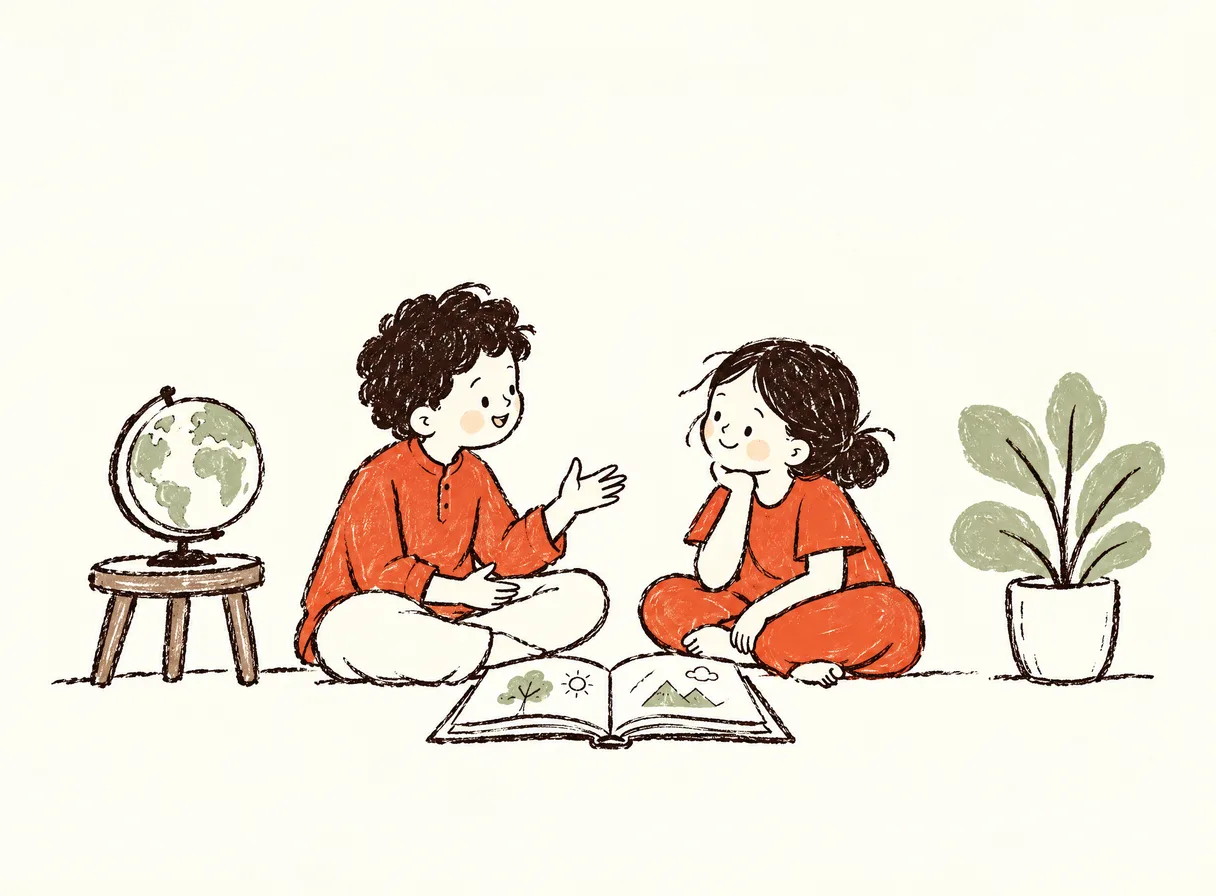
Picture two seven-year-olds who both read well. One can sound out any word you give them, but goes quiet when you ask what they thought of the story, and finds it hard to work with a partner. The other reads just as well, and can also ask a good question, disagree politely and explain an idea in their own words.
Both can read. Only one is really ready for what school, and life, will ask of them next.
Decoding is only the start
Phonics teaches a child to turn letters into sounds and sounds into words. It’s the foundation, and we would never skip it. But it is the mechanics.
What a child does with that skill, how they make sense of a story, form an opinion, ask a question or explain their thinking, depends on a different set of abilities. Communication, curiosity, managing feelings and confidence don’t just appear once a child can decode. They have to be built on purpose, alongside reading, in the same early years.
Treating them as separate, phonics now and life skills later, misses how children actually grow. A five-year-old reading a story about sharing can, in the very same lesson, talk about how sharing feels. Keeping the two apart wastes that moment.
When a programme only does one
A phonics-only approach does what it promises: it produces children who can decode. What it doesn’t automatically build is a child who wants to read, who can talk about what they’ve read, or who carries that confidence into a conversation, a class discussion or a new group of friends.
Parents often notice this later on. A child who reads well on paper but struggles to share an opinion, sort out a disagreement or speak up in class isn’t missing a reading skill. They’re missing what reading was meant to lead to.
Decoding is only half of reading
Reading science builds this into its very definition of skilled reading.
Researchers use a simple equation: Word Recognition × Language Comprehension = Reading. It’s called the Simple View of Reading, first put forward by Philip Gough and William Tunmer in 1986. Decoding sits in the first half. The second half, language comprehension, covers background knowledge, vocabulary, reasoning and understanding how language and stories work. Because the two are multiplied, weakness on either side pulls the whole thing down. A child can decode perfectly and still not understand what they’ve read.
Word Recognition
Decoding: turning letters into sounds, and sounds into words.
Language Comprehension
Background knowledge, vocabulary, reasoning and how stories work.
Reading
In 2001, Hollis Scarborough built on this with her Reading Rope, which shows the separate strands that twist together inside each half. Both models are central to the Science of Reading, and both make the same point: vocabulary, background knowledge and reasoning aren’t extras on top of reading. They’re half of it.
That’s exactly the ground life skills cover. A child who has talked through stories about feelings, fairness, money or nature is building the words and knowledge that will later help them understand harder texts, long before they meet them on a page.
Self-regulation predicts school success
There’s a second reason the “Heart” side of learning matters as much as phonics.
Clancy Blair and C. Cybele Raver reviewed decades of child development research in the Annual Review of Psychology. Their conclusion was that a child’s self-regulation, the ability to manage their attention, feelings and impulses, is one of the strongest predictors of how ready they are for school and how well they do later. Other studies have found that it predicts early maths and literacy even after general intelligence is taken into account.
Think of a child who melts down over a hard word. In that moment, the real problem usually isn’t reading. It’s that they can’t yet sit with frustration or bounce back from a small setback, and that will keep showing up in every subject until someone helps with it directly.
So emotional development isn’t separate from being ready to learn. It sits right underneath it.
The research supports teaching both together
CASEL, the Collaborative for Academic, Social, and Emotional Learning, ran a large meta-analysis covering 213 school programmes and over 270,000 students, from kindergarten to high school. Students who got structured social and emotional learning alongside their regular lessons scored 11 percentile points higher in academic achievement than those who didn’t.
11percentile points
higher academic achievement for students who also had structured social and emotional learning
213programmes
in the meta-analysis, covering more than 270,000 students from kindergarten to high school
In other words, teaching life skills doesn’t slow academic progress down. It helps. Confidence, managing feelings and clear communication aren’t distractions from reading. They help the reading lessons stick.
Many parents worry that anything beyond phonics and worksheets is “extra,” something that eats into time for practising letter sounds. The research suggests otherwise. The academic gains came alongside the life skills work, not at its cost.
What “future ready” really means
It’s easy to think the best head start is a technical skill. What employers say tells a fuller story.
The World Economic Forum’s Future of Jobs Report 2025 surveyed more than 1,000 employers worldwide. Analytical thinking topped their list of essential skills, followed by resilience, flexibility and agility, leadership and social influence, creative thinking, and motivation and self-awareness. Employers expect nearly 39% of core job skills to change by 2030. Tech skills are growing fastest, but creative thinking, resilience, curiosity and lifelong learning are right up there with them.
39%
of core job skills are expected to change by 2030, according to more than 1,000 employers worldwide
None of these can be picked up overnight in a training course. They take shape early, through everyday things like talking about stories, solving small problems and working through disagreements as a child.
Where national policy is heading
NEP 2020 says much the same. It describes the aim of education as building good character and well-rounded people with 21st century skills, not just exam scores, and it puts this right into the Foundational Stage, ages 3 to 8.
Policy, employers and child development research all land in the same place. Reading and life skills were never meant to be taught one after the other. They belong together.
What this looks like at Wordspryng
This is how we plan every Wordspryng session. Each class pairs a phonics or reading goal with a life skill from one of three areas.
-
Heart covers emotional, social, physical and creative growth: how a child understands themselves, gets along with others and shares their ideas.
-
Mind covers thinking and reasoning, along with early ideas about work, money, rules and community.
-
World covers caring for the environment, healthy eating and using technology wisely.
Say a Seed class is learning the sound /h/. The story might be about helping at home. Children practise the sound and blend it into simple words, then talk about a time they helped someone: what they did and how it felt. The phonics and the life skill are practised together, so each one supports the other.

Your child doesn’t have to choose between becoming a strong reader and a confident communicator. Every session builds both, because the research is clear that they were never separate goals in the first place.
Share This Article
WhatsAppSources
- “The Impact of Enhancing Students’ Social and Emotional Learning: A Meta-Analysis of School-Based Universal Interventions,” Durlak, J.A. et al. (2011)
- The Future of Jobs Report 2025
- National Education Policy 2020
- “Decoding, Reading, and Reading Disability,” Gough, P.B. & Tunmer, W.E. (1986)
- Understanding the Simple View of Reading and Scarborough’s Rope
- “School Readiness and Self-Regulation: A Developmental Psychobiological Approach,” Blair, C. & Raver, C.C. (2015)
- “Relating Effortful Control, Executive Function, and False Belief Understanding to Emerging Math and Literacy Ability in Kindergarten,” Blair, C. & Razza, R.P. (2007)