Why Children Can Spend Years in School and Still Struggle to Read
Many children look like readers long before they really are. Why the gap stays hidden, what the research says, and the signs worth noticing at home.
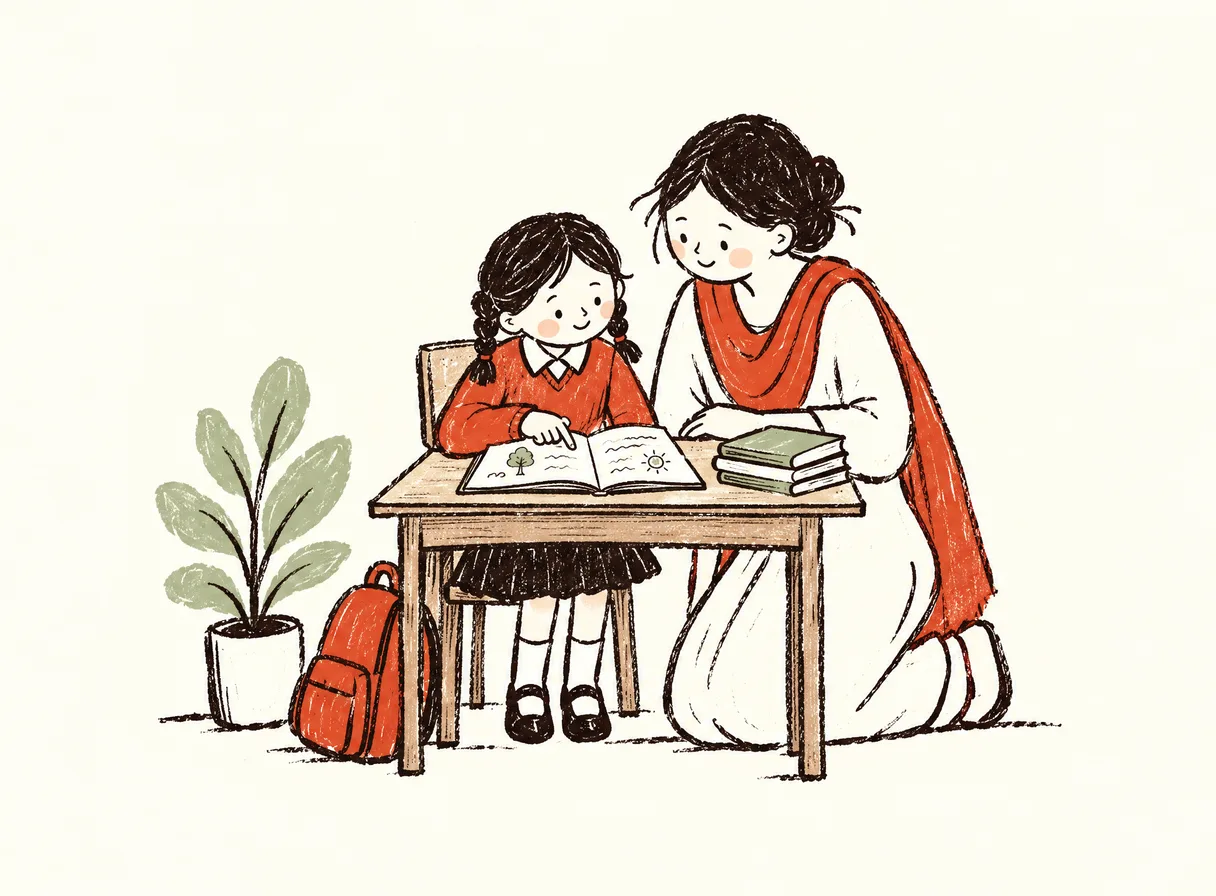
Your child is in Standard III. They know the alphabet by heart, they can read the lessons in their textbook, and their report cards have been fine. Then the teacher hands them a new storybook, and they get stuck on a simple word they’ve never seen before.
If this sounds familiar, you’re not alone, and your child is not “slow.” In most cases, the problem has very little to do with intelligence or effort. It has a lot to do with how they were taught to read.
This is more common than you’d think
ASER 2024, one of India’s largest household surveys of children’s learning, found that only 23.4% of Standard III children could read a Standard II level text. Put simply, most eight-year-olds in India can’t yet read a text meant for the class below them.
It isn’t just India. The World Bank and UNESCO estimate that about 7 in 10 children in low- and middle-income countries can’t read and understand a simple text by the age of 10. They call this “learning poverty.”
23.4%
of Standard III children in India could read a Standard II level text
7 in 10
children in low- and middle-income countries can’t read and understand a simple text by age 10
That’s why NEP 2020 and the NIPUN Bharat mission have made early reading and numeracy a national priority. So much of what a child learns later depends on being able to read on their own first.
Going to school isn’t the same as learning to read
What most parents don’t realise is that a child can look like a reader long before they really are one.
In many early classrooms, children learn words by seeing and hearing them again and again, usually next to a picture or in a sentence they already know. After a while, they recognise the word by its shape. They aren’t working it out sound by sound. They’re remembering it.
For a while, that works. Early books are short and repetitive, so a child can sound fluent without having the real skill underneath.
Think about two children reading the word “cat.” The first has seen it so often that they simply know it. The second has learnt that c, a and t each make a sound, and that those sounds blend together. Both read “cat” correctly. But only the second child can go on to read “mat,” “sat” and “cap,” and any other word made from sounds they know, even one they’ve never seen before.
Remembering The Word
Knows “cat” by its shape, from seeing it again and again.
- mat?
- sat?
- cap?
Sounding It Out
Knows that c, a and t each make a sound, and blends them.
- mat
- sat
- cap
The difference only shows up when the words are new.
Why it matters in every subject
Reading isn’t just one subject. It’s how children get into every other subject.
A maths word problem has to be read before it can be solved. Science and social studies bring in new words every chapter, often with no pictures to help. A child can understand an idea perfectly well and still look like they’re struggling, simply because they can’t get through the text that explains it.
That’s why this gap rarely closes on its own. It usually gets wider. Not because the child learns slowly, but because reading quietly stands between them and everything else.
What the research says
Researchers have been studying this for decades.
In 2000, the US National Reading Panel looked at the research comparing systematic phonics, where children are taught step by step how letters link to sounds, with teaching that covered phonics loosely or not at all. Systematic phonics came out clearly ahead, from kindergarten all the way to Grade 6, and for children who were finding reading hard. It worked best when it started early, in kindergarten and Grade 1.
The panel’s message was simple: children need to be taught how to decode words, clearly and in a planned order. In our experience, children who are left to pick it up on their own often find shortcuts instead, like guessing from the picture or the first letter. Those shortcuts work for a while, and then they stop working.
This matters because many classrooms still treat phonics as an add-on, mixed in with sight words and picture cues. The research points the other way. A clear, step by step path through letter sounds, blending and word building works better, and the earlier it starts, the better.
“Isn’t this just how some kids learn?”
It’s a fair question. Every child learns at their own pace, and some difference is completely normal.
But if a child still can’t sound out new words after a few years of school, it’s worth looking into. Very often, the reason is simply that they were never taught to decode step by step, and they pick it up quickly once they are. If progress stays slow even with good phonics teaching, that’s the time to see a specialist, because something like dyslexia could be part of the picture. Either way, structured phonics is the right place to start. It’s also at the heart of support for children who find reading hard.
Why the gap stays hidden for so long
A child who has memorised enough words can pass as a reader for years, especially when the class reads aloud together, the books are predictable and there are pictures on every page.
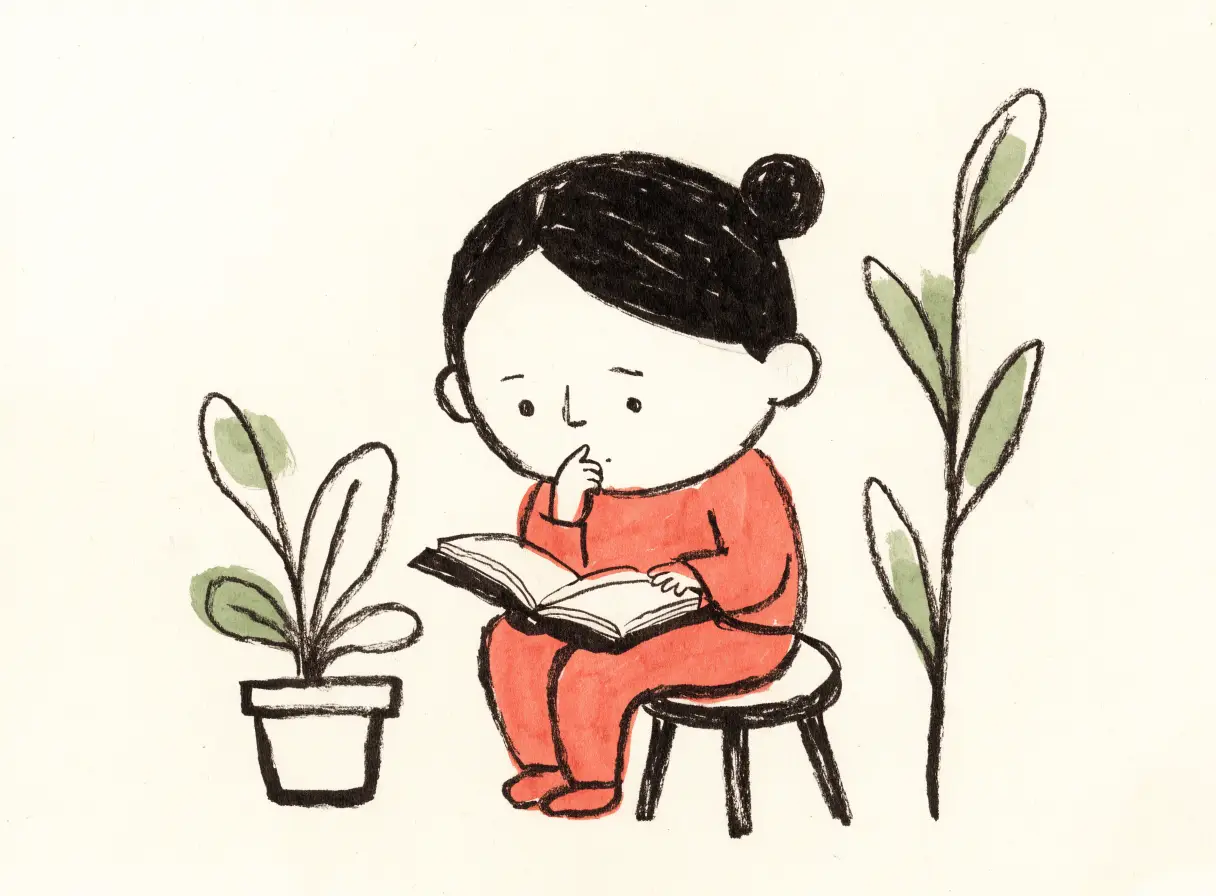
The gap shows up when that support goes away. A new book. A word with no picture next to it. A worksheet with no clues. Reading quietly on their own. Most parents first notice around Standard II or III, a few years after it would have been easiest to fix.
By then, many children have also decided that reading is hard, or that they’re just not good at it. The reading gap and the confidence gap grow together.
What to look out for at home
A few signs are worth noticing, without jumping to conclusions. Your child might:
None of these on their own means something is wrong. Usually, it just means your child wasn’t taught to decode step by step, and has been managing in other ways that worked until the books got harder.
If more than one or two of these sound familiar, there’s no need to worry. Just check. A short reading assessment, like the one we use at the start of a phonics programme, can show in a few minutes whether a child is decoding or memorising, and exactly which sounds they still need to learn.
The earlier you start, the easier it is
Here’s the good news. In most cases, this is a teaching problem, and teaching problems can be fixed, especially when they’re caught early.
Systematic phonics teaches children to work out any new word, instead of memorising a limited list. Add regular checks on what a child has really learnt, not just what they seem to know, and the gap can close long before it turns into a Standard III surprise.
This is what Wordspryng is built on. Every level teaches children to read on their own, not just recognise a set of words, and we check progress at every step instead of assuming it.
Share This Article
WhatsApp